October 21, 2025 - Dutch startup HULO has secured EUR 2.3 million in seed funding to expand its leak detection technology internationally. Besides LUMO Labs and VP Capital, Vanagon, Rabobank, the Frisian Development Fund (FOM), and the NEW-TTT programme also participate in the funding round.
HULO offers a software platform that uses artificial intelligence to help water utilities find and fix leaks early—before they cause major water loss. By analysing data that utilities already collect, the platform detects leaks quickly and precisely, without needing new sensors or physical inspections.
This matters, because around 30% of treated drinking water is lost globally—often unnoticed, and mostly due to ageing infrastructure. That loss doesn’t just waste water; it also means energy is wasted on treating and pumping water that never reaches the tap. It’s a hidden but significant driver of both climate impact and biodiversity loss, especially in regions already facing water stress.

"The future of water infrastructure requires that digital innovation integrates with the operational reality of today's networks. We're building solutions that are both powerful and practical — enabling water utilities to take action without overhauling their systems."
Robbert Lodewijks, co-founder of HULO

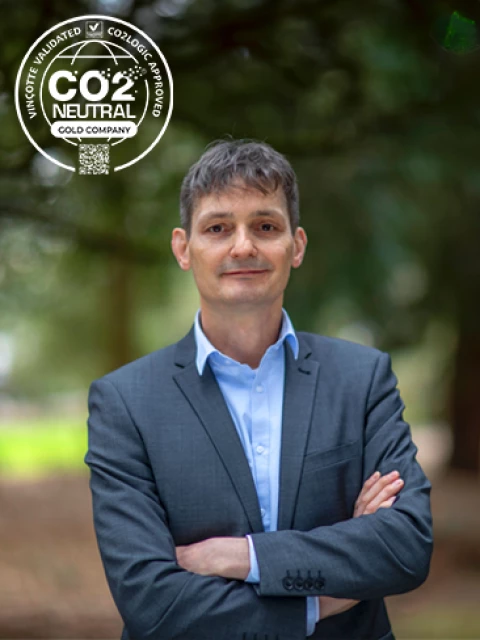
Robbert Lodewijks, CEO & Frank van der Hulst, CTO. Founding team of HULO.
The company is currently active in Europe and has begun work in Latin America. The new funding will support further expansion and continued development in key areas including AI, network analytics, cybersecurity and customer success.
For VP Capital, HULO represents the kind of practical, impact-driven innovation we aim to support. Its software-only approach offers a cost-effective, scalable solution to a global problem. By preventing water waste and avoiding the emissions that come with unnecessary treatment and distribution, HULO contributes to a regenerative, climate-conscious and resource-efficient future.

HULO team
As pressure on global water systems continues to grow, we believe that solutions like HULO will play a crucial role in building more resilient infrastructure—while helping protect one of the Earth’s most essential and endangered resources: freshwater.