About VP Capital

Our mission for positive impact is deeply rooted in our history. Explore how our current strategy and sustainability efforts have grown from this legacy.

Team

The strength of our company hinges on its team. They are the people propelling our mission to foster a more sustainable planet and society.

Philanthropy

Find out how we unlock the transformative potential of charity, through a multifaceted donation strategy.

Our background

Our roots date back more than 150 years. Discover our journey from family business to family office.
From the global climate crises to the Doughnut model: How we formed our Impact-First Strategy

From the global climate crises to the Doughnut model: How we formed our Impact-First Strategy

October 3, 2024 - Humanity’s most pressing challenge today is ensuring that we meet everyone’s needs while respecting the Earth’s limits. This means providing food, shelter, healthcare, and security without exceeding the planet’s capacity to sustain us. At VP Capital, we take this challenge seriously. That’s why we have adopted an impact-first investment strategy, inspired by Kate Raworth’s Doughnut model, which offers a clear framework for balancing social needs with planetary boundaries.

climate

Global climate and biodiversity crises: a continuing wake-up call

The climate and biodiversity crises are no longer distant threats – they are already reshaping economies, ecosystems, and societies around the world. Earth Overshoot Day continues to move alarmingly early in the calendar year, illustrating that humanity is consuming natural resources faster than the Earth can regenerate them. Recent findings from the Planetary Boundaries framework also show that six of the nine planetary boundaries have now been exceeded, increasing the risks of irreversible environmental change.

At the same time, the consequences are becoming increasingly visible. Across the globe, communities are facing prolonged droughts, floods, wildfires, biodiversity decline, food insecurity, and growing social inequality. Climate-related disruptions increasingly affect supply chains, financial markets, and geopolitical stability, while biodiversity loss threatens the ecosystems our economies fundamentally depend on.

Yet these developments also reinforce the urgency – and opportunity – to rethink the role of capital.

The role of the financial sector in accelerating solutions

A hopeful perspective for navigating these interconnected crises comes from Kate Raworth’s Doughnut model. The framework encourages societies and economies to operate within a “safe and just space” – balancing a strong social foundation with the ecological ceiling of the planet.

Achieving this balance requires aligning financial goals with environmental and social goals. It calls for a broader definition of value creation: one that combines financial resilience with measurable positive impact for people and planet.

The financial sector – including family offices – has a critical role to play in this transition. Through long-term capital, strategic partnerships, and active ownership, investors can help accelerate solutions that contribute to systemic change. At VP Capital, we believe impact investing is not simply about avoiding harm, but about actively supporting the transition towards a regenerative, inclusive, and net-zero economy.

Investing in the future: Three key areas of focus

In 2024, we launched our renewed impact-first strategy, building on years of experience in impact investing and inspired by the principles of the Doughnut model. Our strategy focuses on three interconnected priorities: biodiversity, climate resilience, and social equality.

To contribute to these themes, we invest in six key solutions: regenerative, circular, bio-based, toxicity-free, net-zero, and inclusive solutions.

biodiversity-bsc-why-1

1. Biodiversity:

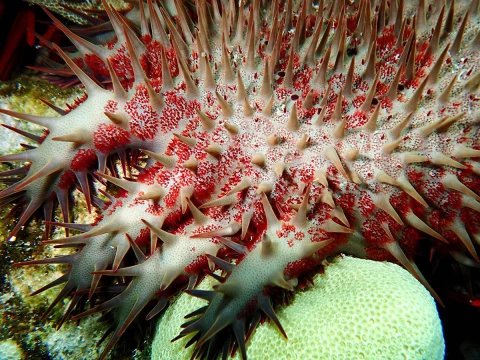
Protecting and restoring ecosystems is essential for the resilience of both nature and society. Biodiversity underpins food systems, clean water, climate regulation, and economic stability. Our investments support solutions that preserve ecosystems, promote regenerative agriculture, reduce pollution, and contribute to nature restoration.

melting-ice

Climate resilience:

Supporting innovative technologies and scalable solutions that reduce greenhouse gas emissions remains critical in the transition towards a low-carbon economy. We invest in solutions that contribute to energy efficiency, renewable energy, circular production models, and climate adaptation.

social-equality

Social equality:

A sustainable future can only succeed if it is inclusive. Social equality remains central to resilient societies and economies. Our investments therefore support initiatives that improve access to essential services, promote fair labour conditions, strengthen communities, and create equal opportunities.

An impact-first strategy: from ambition to action

At VP Capital, impact investing has been part of our approach since 2018. Over the years, we learned that meaningful impact requires more than good intentions – it demands intentionality, measurable outcomes, transparency, and long-term commitment.

Our current strategy therefore places impact at the centre of the investment cycle. We integrate biodiversity, climate, and social equality considerations into our screening, due diligence, engagement, monitoring, and reporting processes.

We believe capital can help accelerate the transition towards a future where economies operate within planetary boundaries while supporting human wellbeing. By investing in innovative ventures, impact funds, sustainable real estate, and transformative businesses, we aim to contribute to solutions that are both scalable and future-proof.

The challenges are significant, and no single organisation can solve them alone. But by working together, sharing knowledge, and directing capital towards meaningful solutions, we believe progress is possible.

Because ultimately, investing is not only about shaping portfolios. It is about shaping the future.

Sources: Rockström, J., Richardson, L., Steffen, W., Mace, G. M., et al. (2023). Earth beyond six of nine planetary boundaries

Last update: June 2026

From the global climate crises to the Doughnut model: How we formed our Impact-First Strategy

Related insights